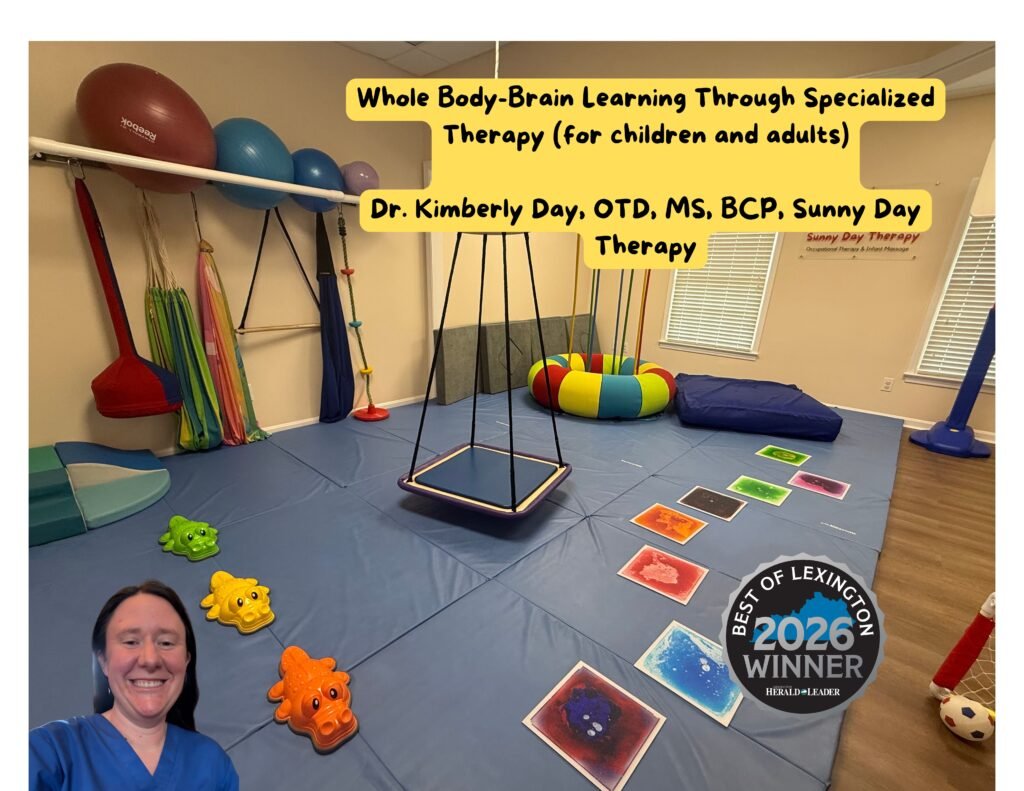
by: Dr. Kimberly Day, OTD, MS, BCP, PMH-C, PCES, CIMI-2, CPRCS, ECHM, Autism Certificate
Occupational Therapist and Owner of Sunny Day Therapy, Lexington, Kentucky

Meeting Sensory Needs to Optimize Attention and Regulation
Does your child constantly move, struggle to sit still, become overwhelmed by noise, seek out certain textures, or have difficulty calming down after a busy day?
Children’s neurological and sensory systems crave movements to help them regulate. The right amount of movements can help children participate in everyday activities, manage sensory input, develop body awareness, and work toward goals such as improved attention, emotional regulation, and participation in school, play, and family routines.
At Sunny Day Therapy, we believe that understanding how each child’s body and brain respond to the world is an important step toward helping children and families shine, do, and thrive. For families in Lexington and surrounding Central Kentucky communities, pediatric occupational therapy can help identify practical strategies that fit your child’s unique sensory and emotional needs.
What is a Sensory Diet?
A sensory diet is a personalized collection of sensory experiences, movement activities, environmental adjustments, and functional strategies incorporated into a person’s daily routine.
Just as nutritional needs differ from person to person, sensory needs can vary throughout the day. One child may benefit from movement before sitting down for homework, while another may need a quieter environment after a busy school day. Some children seek frequent opportunities to push, pull, climb, or jump, while others become overwhelmed by loud noises, crowded spaces, or unexpected touch.
A sensory diet is not a one-size-fits-all list of sensory toys. It is a plan developed around an individual’s sensory patterns, daily routines, strengths, challenges, and occupational therapy goals.
A pediatric occupational therapist may recommend strategies to support:
– Body awareness and understanding where the body is in space
– Attention and participation during schoolwork or daily routines
– Emotional regulation and recovery after overwhelming experiences
– Tolerance of everyday sensory experiences
– Transitions between activities
– Participation in play, self-care, and family activities
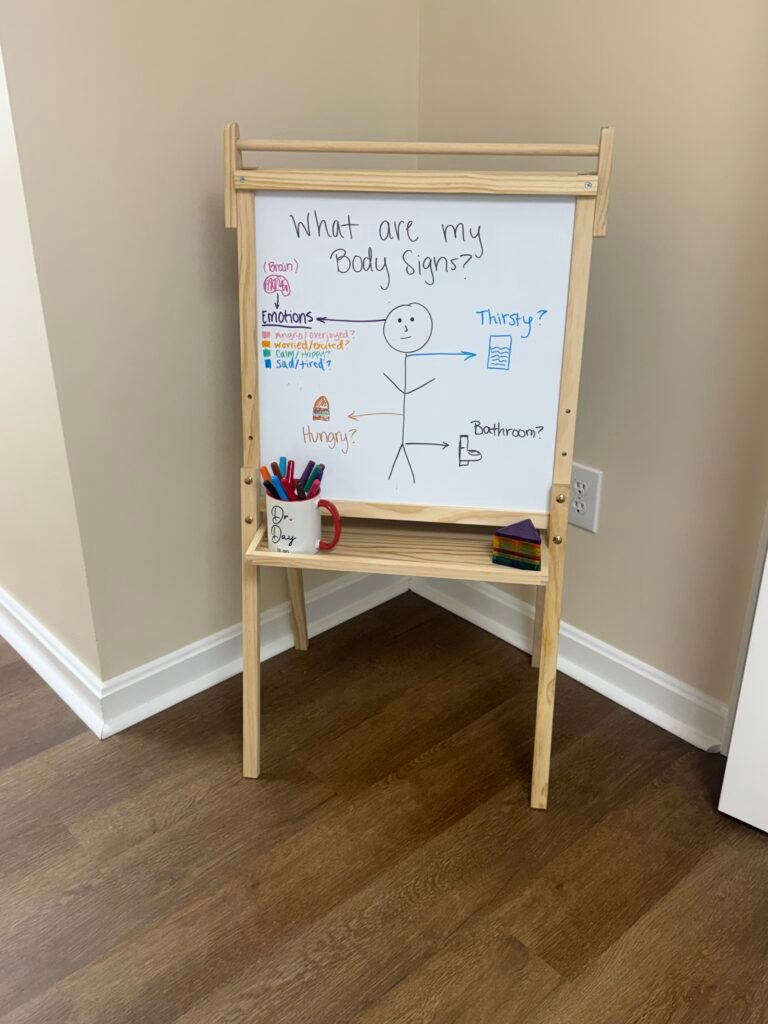
The goal is to help children participate more comfortably and successfully in their everyday lives. Whether that is sitting still during circle time, completing homework, or listening to their teacher, our OT Doctors will recommend tools, seating, and strategies to optimize learning. We help clients feel confident by helping them recognize body signs. Our programs give clients a voice and plan to understand their bodies and brains. We teach both physical exercises and cognitive strategies based on your child’s unique learning profile.
How Does an Occupational Therapist Create a Sensory Diet?
A personalized sensory diet typically begins with an occupational therapy evaluation. The therapist considers how a child responds to sensory experiences and how those responses affect daily functioning.
Depending on the child’s needs, an evaluation may include:
– **Sensory assessments:** Questionnaires or standardized assessment tools that help identify sensory patterns.
– **Clinical observations:** Watching how a child moves, plays, explores equipment, and responds to different activities in a sensory-motor environment.
– **Family interviews:** Learning about the child’s routines, preferences, sleep, play, school participation, and challenges at home or in the community.
– **Functional assessment:** Identifying situations in which sensory needs may interfere with everyday activities.
– **Individualized goal setting:** Determining what the family and therapist want to improve and how progress will be monitored.
After the evaluation, the occupational therapist can recommend strategies that fit the child’s needs and the family’s daily routine. The therapist may also collaborate with caregivers, teachers, and other providers when appropriate.
Learn more about sensory integration therapy at Sunny Day Therapy here.
What Activities are Included in a Sensory Diet?
Sensory diets may include activities that provide movement, touch, pressure, visual input, sound, or oral sensory experiences. The right combination depends on the individual rather than a diagnosis or behavior alone. We have specialized assessments that help us determine your child’s learning profile and sensory patterns.
1. Proprioceptive Activities: Helping Children Understand Their Bodies
Proprioception is the body’s ability to sense the position and movement of its joints and muscles. Activities that involve pushing, pulling, lifting, and carrying can provide proprioceptive input.
Examples may include:
– Wall push-ups
– Carrying appropriate household items
– Pushing a laundry basket
– Animal walks
– Climbing and playground activities
– Age-appropriate resistance activities
An occupational therapist may recommend these activities when they support a child’s functional goals, such as preparing for a classroom task or participating in a daily routine. Through our study and clinical observations, we can tell you what exercises to do and when they will be most effective at helping with regulation and body awareness.
2. Tactile Activities: Exploring Touch and Texture
Tactile input comes through the sense of touch. Some children actively seek tactile experiences, while others avoid certain textures or find unexpected touch uncomfortable.
Possible activities include:
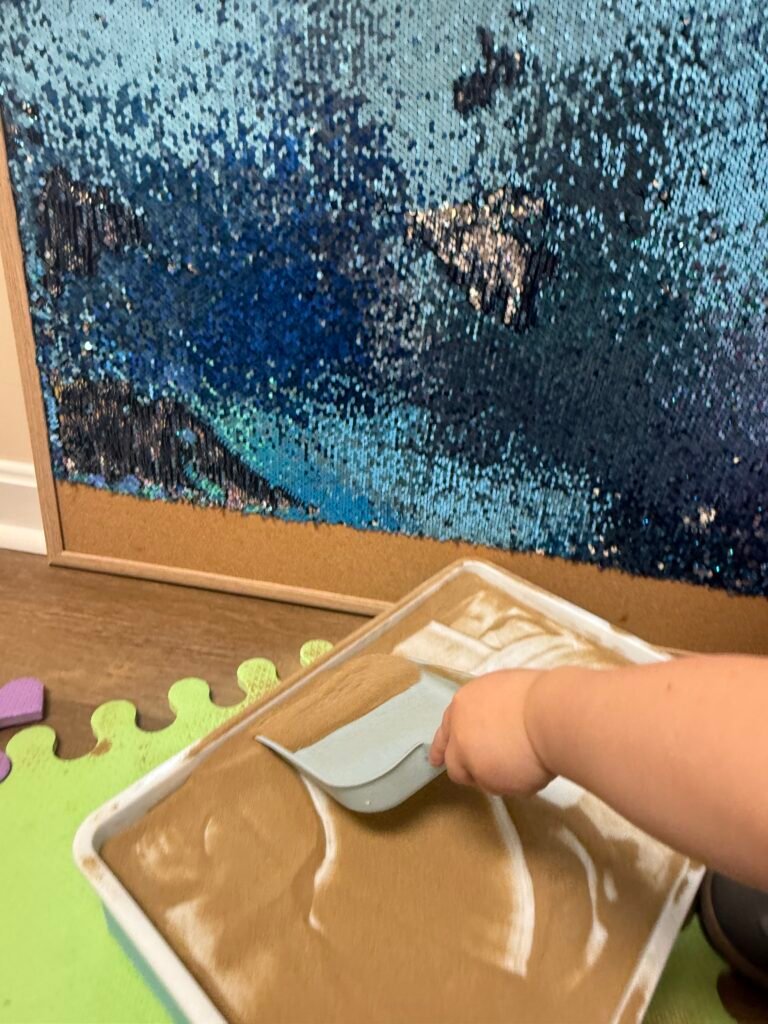
– Playing with shaving cream or other appropriate messy-play materials
– Exploring textured toys and sensory bins
– Using fidgets, stress balls, or textured objects
– Playing with age-appropriate materials that offer different tactile experiences
These activities can provide opportunities for exploration and participation. They should be adapted to the child’s comfort, developmental level, allergies, and safety needs. The answer is not to throw a variety of sensory toys at children; we want to find “just the right” tool for the most effective time. We help you organize a plan so your attention and learning are efficient.
3. Oral Sensory Activities: Supporting Participation and Regulation
Some children seek oral sensory input, particularly during transitions, focused tasks, or moments of stress.
An occupational therapist may explore strategies such as blowing bubbles, sipping water through an appropriate straw, or incorporating suitable crunchy or chewy foods when safe and appropriate.
Oral sensory strategies should be selected carefully, especially for infants and children with chewing, swallowing, or feeding difficulties. Choking hazards and unsafe oral items should always be avoided.
4. Movement Activities: Swinging, Rocking, and Active Play
The vestibular system helps the brain process movement and changes in head position. Movement experiences can affect alertness, balance, and participation.
Depending on a child’s response, an occupational therapist may explore:
– Gentle, predictable rocking
– Linear swinging
– Playground activities
– Dancing and rhythmic movement
– Age-appropriate yoga or balance activities
– Specific movement routines before homework or other seated tasks
Occupational therapy clinics may use specialized swings, therapy balls, climbing equipment, and other sensory-motor tools. Some strategies can also be adapted for home or school.
Movement is not automatically calming for every child. Spinning, swinging, and other vestibular activities can produce different responses, so activities should be selected and monitored by a qualified professional. We do not use a cookie-cutter approach but apply our knowledge with careful consideration of clinical responses and how these translate into practical everyday success.
5. Deep Pressure and Body-Based Strategies
Some children find firm, predictable pressure or resistance-based activities comfortable and organizing. An occupational therapist may consider appropriate body-based activities as part of an individualized plan.
Depending on the child’s needs and the therapist’s training, strategies may include specific movement exercises, therapeutic touch, or other body-awareness activities.
Weighted blankets, weighted stuffed animals, compression garments, and sensory socks should not be used as universal solutions. Their suitability depends on the child’s needs, age, health, ability to remove the item independently, and safety considerations. An occupational therapist can help families determine whether a particular tool is appropriate and when/how it will be most effective. Environments and learner profiles influence our suggestions. We love educating parents about the benefits and purpose of sensory input.
6. Visual Sensory Strategies: Creating a Calming Space
Busy visual environments can be distracting or overwhelming for some children. Adjusting the environment may help a child participate more comfortably.
Examples include:
– Reducing visual clutter
– Creating a quiet, designated break area
– Using a simple visual schedule
– Providing a cozy reading corner
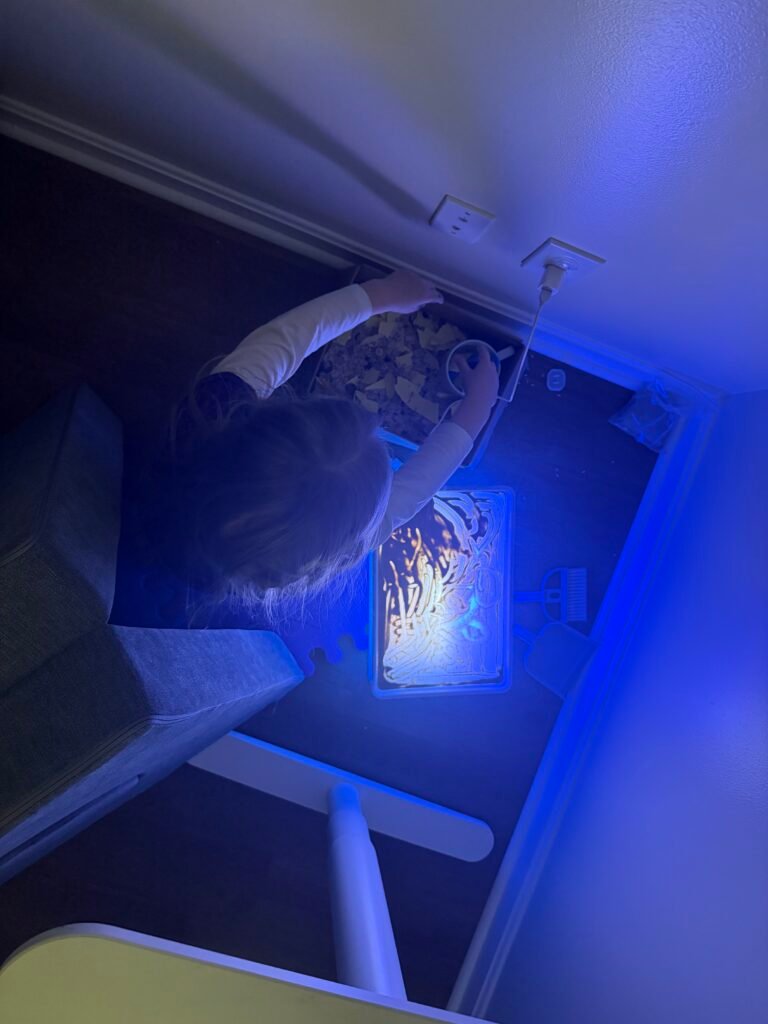
– Offering supervised opportunities to observe bubbles or other visually engaging materials
A calming space does not need to be elaborate. Sometimes, a predictable place with fewer distractions and a familiar routine is the most useful starting point.
7. Auditory Strategies: Supporting Children Who Are Sensitive to Sound
Some children have difficulty participating in environments with loud, unpredictable, or competing sounds.
Possible strategies include:
– Reducing unnecessary background noise
– Providing access to a quieter space
– Preparing a child for expected loud sounds
– Exploring appropriate noise-reducing headphones when suitable
– Using music or rhythmic activities when they support the child’s participation
Headphones should not interfere with safety or a child’s ability to hear important instructions and environmental sounds. The goal is to support participation rather than eliminate every opportunity to experience sound. We can help determine when and how to use sensory tools.
8. Environmental Changes: Using Routines, Habits, Nature, and Breaks
Sensory regulation is influenced not only by activities but also by the environment and demands placed on a child.
A change in scenery, a short walk, outdoor play, or a break from a busy setting may help some children return to an activity with greater comfort and readiness.
An occupational therapist may also recommend adjustments to transitions, task length, lighting, noise, seating, or the timing of movement breaks.
For example, a child who struggles to begin homework after a long school day may benefit from a predictable transition routine that includes a snack, outdoor play, and a brief movement activity before sitting down to work.
The best strategy is one that fits the child, the situation, and the family’s routine.
How Do You Know if Your Child Needs a Sensory Diet?
Parents often seek occupational therapy when they notice patterns that interfere with their child’s everyday participation.
You might consider discussing a sensory evaluation with your pediatrician or occupational therapist if your child regularly:
– Becomes overwhelmed by ordinary sounds, textures, movement, or busy environments
– Seeks frequent movement or intense physical activity
– Has difficulty transitioning between activities
– Struggles to participate in dressing, bathing, grooming, or other daily routines
– Has difficulty staying engaged during classroom or homework activities
– Becomes distressed in crowded or unpredictable settings
– Needs substantial adult support to recover after challenging sensory experiences
These behaviors can have many explanations. They do not automatically indicate a sensory processing disorder or mean that a child needs a sensory diet. An individualized evaluation helps determine whether occupational therapy and sensory-based strategies are appropriate.
How Often Should a Child Use a Sensory Diet?
There is no single schedule that works for every child.
Some children benefit from specific activities before predictable challenges, such as homework, mealtimes, or transitions. Others may need opportunities for movement or environmental adjustments at several points throughout the day.
A sensory diet should include clear goals and a way to monitor whether the strategies are helping. Families and therapists can observe changes in participation, comfort, attention, transitions, and recovery after challenging situations.
If a strategy consistently increases distress, causes discomfort, or does not support the intended goal, it should be reconsidered. Sensory diets also need periodic updates as children grow, develop new skills, and encounter changing environments and expectations.
A well-designed plan is flexible. It evolves with the child rather than requiring the child to follow the same routine indefinitely. We have specific assessments, evaluation, the experience to guide our recommendations.
Can Occupational Therapy Help Kids, Parents, and Caregivers with Stress?
Absolutely. Supporting a child with sensory needs can take considerable energy, particularly during periods of transition, disrupted routines, or increased family demands.
Caregivers have sensory, emotional, and physical needs of their own. Occupational therapy can help adults identify how stress affects daily functioning and develop practical routines that support health, participation, and well-being.
Depending on the individual’s goals and the provider’s scope of practice, occupational therapy may address wellness routines, body awareness, activity balance, environmental modifications, and strategies for managing overwhelming daily demands.
This is especially relevant during major life transitions, including becoming a parent, adjusting to caregiving responsibilities, or recovering from a significant health event.
What is Co-Regulation and How Does it Help Parents and Children?
Co-regulation describes the ways people support one another in developing and maintaining emotional and physiological regulation. For infants and young children, a caregiver’s familiar voice, responsive touch, gentle movement, and predictable interactions can help create a sense of safety.
A caregiver’s own well-being matters, too. When adults have support for recognizing stress and responding to their own needs, it may become easier to respond thoughtfully to a child’s cues.
Sometimes, the most meaningful starting point is not another sensory tool. It may be a quieter environment, a predictable routine, a moment of connection, or time spent together outdoors.
Parents and children are individuals with different temperaments, preferences, and sensory needs. Finding the strategies that work for each person can support healthier routines and stronger relationships.
Where Can You Find Pediatric and Adult Occupational Therapy for Sensory Needs in Lexington, KY?
If you are looking for sensory support for your child or pediatric/adult therapy that addresses your daily living skills, independence, strength, and practical participation in Lexington or the surrounding Central Kentucky area, Sunny Day Therapy offers an individualized, relationship-centered approach to occupational therapy. Our main office is located at Hamburg but we partner with select community partners including Seton, St. Mark Catholic School, Northeast daycare, Higher Ground, and more.
Our approach recognizes that children do not exist in isolation from their families, schools, environments, and daily routines. Understanding the whole child helps us identify practical strategies that can be carried into everyday life.
Occupational therapy may include sensory assessment, movement-based activities, environmental adaptations, body-awareness strategies, and caregiver education when appropriate to the child’s goals.
We believe that every person is wired a little differently. The goal is not to make every child respond to the world in the same way. It is to discover the tools, routines, and supports that help each child participate, build skills, and thrive.
**Looking for sensory-related occupational therapy in Lexington, KY?** Contact Sunny Day Therapy to learn more about our services and discuss whether an occupational therapy evaluation may be appropriate for your child. We offer pediatric, baby, teenager, and adult therapy.
Visit Sunny Day Therapy to explore our services or Contact Us.
*Shine. Do. Thrive.*
—
Frequently Asked Questions about Sensory Diets and Sensory Therapy for Kids and Adults
What is a sensory diet for a child?
A sensory diet is an individualized plan of activities and environmental strategies designed to address a child’s sensory needs and support participation in everyday activities. An occupational therapist develops recommendations based on the child’s evaluation, goals, and responses to sensory experiences.
Who can create a sensory diet?
An occupational therapist with appropriate training and experience can assess a child’s sensory needs and develop an individualized plan. The therapist can also help caregivers understand how to use strategies safely at home, school, and in the community. Our OTs use a specific assessment designed and researched by OTs to assess and label sensory patterns. Sensory strategies and tools are a fad in our culture; their appropriate use should be informed by evidence, experience, and knowledge. The use of certain modalities is licensed and/or requires extra certification in some states including Kentucky. Our company takes pride in pursuing advanced training and certifications to guide our decision making.
Can I create a sensory diet at home?
Parents can offer everyday opportunities for movement, play, outdoor activity, and predictable routines. However, a formal sensory diet should be individualized to the child’s needs and goals. An occupational therapist can help determine which strategies are appropriate and how to monitor their effects.
What are examples of sensory diet activities?
Examples may include wall push-ups, playground play, movement breaks, textured play materials, quiet spaces, predictable routines, and appropriate noise-reduction strategies. Not every activity is helpful for every child, so recommendations should be based on individual needs and responses.
Do sensory diets help with ADHD, autism, sensory processing, and executive functioning deficits?
Some children with ADHD or autism may benefit from individualized sensory strategies as part of a broader support plan. However, sensory diets do not treat every challenge associated with either diagnosis, and the effectiveness of sensory-based interventions varies. Occupational therapy goals should focus on meaningful improvements in daily participation and functioning.
How long does it take for a sensory diet to work?
There is no universal timeline. Some environmental changes may make daily activities easier relatively quickly, while other goals require ongoing observation, practice, and adjustments. The therapist and family should monitor functional outcomes and modify the plan as needed.
Does my child need special sensory equipment?
Not necessarily. Some children benefit from specialized therapy equipment, but many strategies use everyday activities and simple environmental changes. An occupational therapist can help determine whether specialized equipment is needed and whether it is safe and appropriate for the child. We love sharing resources including exercises, games, tools, and equipment when necessary. We don’t necessarily believe in throwing an expensive piece of equipment or magic-cure-all suggestion at an issue; we believe in teaching habits and building routines rather than throwing a band-aide on a problem.
Can sensory strategies help adults, parents, and teenagers as well as children?
Yes. Occupational therapy can help adults explore individualized strategies for managing daily demands, supporting participation, and developing sustainable wellness routines. Caregiver well-being is also an important consideration when supporting a child’s regulation and development.
If you would like to know if OT is a good fit for you and your family, we are happy to answer your questions. Feel free to email admin@sunnydaytherapy.net or call us/leave a voicemail at 859-575-0799. We look forward to talking to you more about our services. Learn more about Dr. Day’s upcoming trainings and speaking appearances by following Dr. Day’s social media: Facebook: Sunny Day Therapy and instagram: @sunnydaywellnessot. Learn more about our therapy services!