By. Dr. Kimberly Day, OTD, MS, OTR/L, BCP, CIMI-2, CPRCS, PMH-C, PCES, ECHM
Board Certified Pediatric Occupational Therapist | Founder of Sunny Day Therapy | Lexington, Kentucky
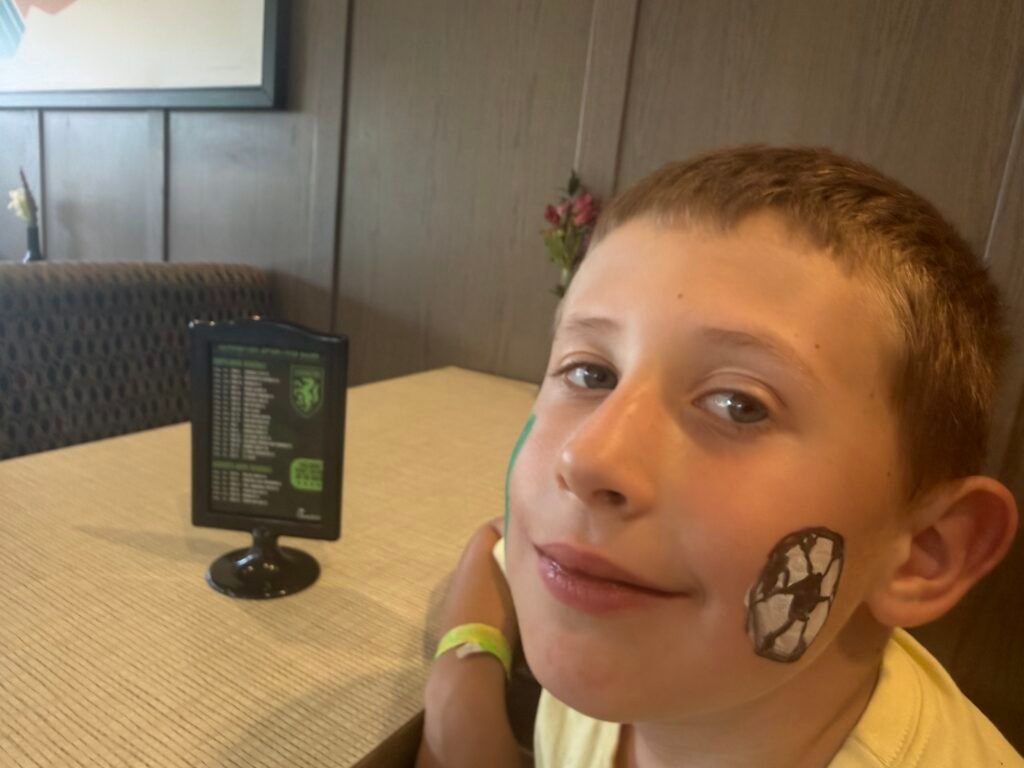
With the FIFA World Cup inspiring millions of children around the world to lace up their cleats, many parents are asking: “Is soccer simply a fun sport, or does it actually help children grow?”
The Power of Soccer
As a pediatric occupational therapist in Lexington, Kentucky, I see soccer as much more than a game. Soccer is a powerful developmental activity that strengthens the brain, body, and nervous system while supporting the skills children need for school, friendships, play, and independence.
Every pass, kick, sprint, stop, and change in direction provides opportunities for children to develop executive functioning, coordination, sensory processing, emotional regulation, and confidence.
Soccer as Inspiration
Soccer has the power to inspire imagination, promote social connection, and create meaningful opportunities for children to learn through movement. This week at Sunny Day Therapy, we are using soccer-inspired activities to enhance motor skills, problem solving, teamwork, and imagination in our pediatric therapy sessions.
Movement that is More than Just a Game
Sports are more than just a game. They are opportunities to develop resilience, learn how to handle challenges, practice flexibility, and experience the emotions that come with being part of a team.
Movement is essential for growing bodies and brains. Physical activity supports strength, flexibility, cardiovascular health, blood flow, digestion, attention, mood, and the release of feel-good chemicals called endorphins.
Lexington, Kentucky families have many opportunities to encourage active play through community sports, outdoor recreation, and movement-based activities. Whether a child participates in organized soccer, backyard play, or soccer-inspired therapy activities, movement provides valuable opportunities for children to strengthen their bodies, develop confidence, and build skills needed for everyday life. This article will go through the science of soccer and then share practical therapy-inspired educational soccer game and activity ideas for your children.
Let’s explore what the science says about why pediatric occupational therapists love soccer.
How Soccer Supports Brain Development
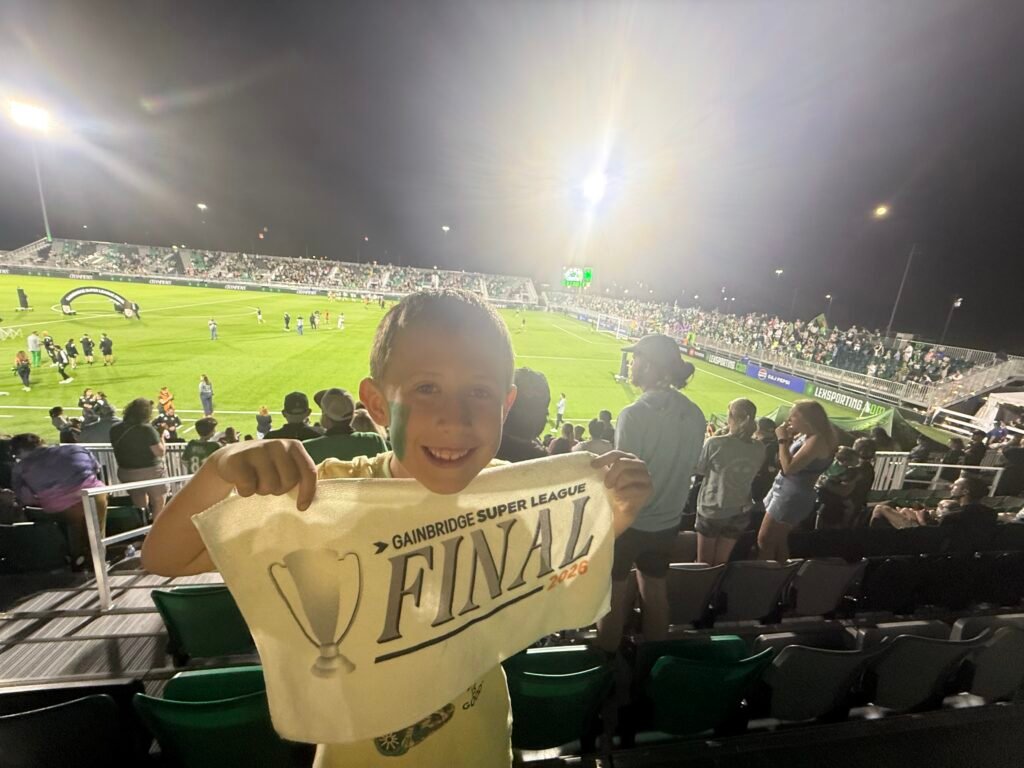
Soccer is a physically active game, but it is also a complex thinking activity. During a soccer game, a child’s brain is constantly processing information, making decisions, and adapting to changes in the environment.
Soccer supports development of:
* Executive function- “the air traffic control of the brain” (Harvard, 2011) that prioritizes information and organizes behaviors from start to finish
* Working memory
* Attention
* Inhibition
* Cognitive flexibility
* Problem solving
A soccer player must constantly scan the environment, predict where teammates and opponents will move, remember strategies, follow rules, control impulses, and make split-second decisions.
Indeed, these are the same executive functioning skills children use every day at home and school.
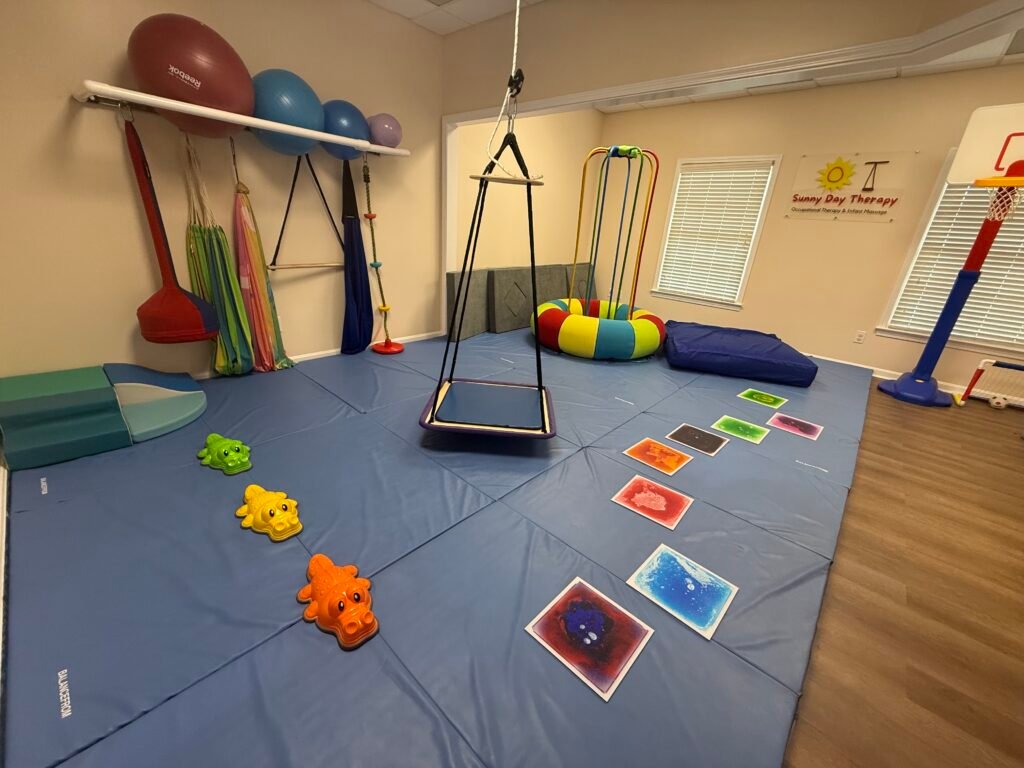
Executive function training (whether on the soccer field or a designed therapy experience in Sunny Day Therapy’s sensory motor gym) supports:
* Following directions
* Completing homework
* Starting and finishing tasks
* Managing emotions
* Adapting when plans change
* Solving problems independently
Research examining youth soccer participation suggests that soccer training can support cognitive skills, including attention, inhibitory control, working memory, and overall cognitive performance.
How Much Movement Do Children Need Each Day?
Movement is one of the foundations of healthy childhood development.
The World Health Organization and the American Academy of Pediatrics support regular movement throughout childhood.
General recommendations include:
Infants
Infants benefit from frequent opportunities for movement throughout the day, including supervised floor play and tummy time.
Toddlers and Preschoolers
Young children should receive approximately “3 hours of movement throughout the day” including active play.
Examples include:
* Running
* Climbing
* Dancing
* Playground play
* Ball activities
School-Aged Children and Adolescents
Children ages 6 and older should participate in at least “60 minutes of moderate-to-vigorous physical activity daily”. In our OT clinic, we seek to expose children to targeted exercises to improve strength and promote a love of movement.
Soccer naturally incorporates:
* Aerobic activity
* Muscle strengthening
* Bone strengthening
* Coordination
* Social participation
How Soccer Strengthens Executive Function
One of the reasons pediatric occupational therapists love soccer is because it naturally challenges executive functioning skills.
During a game, children practice:
Planning
Where should I move?
Where should I kick the ball?
Organization
What position am I playing?
What is my role on the team?
Initiation
How do I get started?
Impulse Control
Can I wait for the right moment?
Flexible Thinking
What happens if the other team changes the plan?
Even losing provides a valuable learning opportunity. Children practice coping with disappointment, changing strategies, problem solving, and regulating emotions.
These are the same skills needed for:
* Homework
* Following routines
* Completing daily tasks
* Handling frustration
* Managing unexpected changes
Learn about executive function coaching therapy
How Soccer Develops the Vestibular System and Body Awareness
The vestibular system, located in the inner ear, helps the brain understand where the body is in space and how it is moving. The vestibular system is one of eight sensory systems occupational therapists address in the therapy clinic.
Soccer naturally provides vestibular input through:
* Running
* Stopping
* Spinning
* Jumping
* Turning
* Changing directions
* Head position changes
This movement helps support:
* Body awareness
* Balance
* Visual stability
* Postural control
A strong vestibular system helps children feel more organized and confident in their bodies.
Learn about Sensory Integration Therapy (Specialized Occupational Therapy)
—
How Soccer Improves Bilateral Coordination
Bilateral coordination means using both sides of the body together in a coordinated way.
Soccer requires children to:
* Alternate legs
* Rotate the trunk
* Cross midline
* Shift weight between feet
* Coordinate arms and legs together
These skills support everyday activities including:
* Handwriting
* Dressing
* Cutting with scissors
* Riding a bike
* Playing on playground equipment
When children develop strong body coordination, they often feel more confident participating in activities with peers.
—
How Soccer Enhances Visual Processing Skills
Soccer is a visually demanding sport.
Players must:
* Scan their environment
* Track moving players
* Judge distance and speed
* Monitor the ball
* Use peripheral vision
* Anticipate movement
* Plan their next action
These visual processing skills support many childhood activities, including:
* Reading
* Copying from a board
* Finding items in an environment
* Navigating spaces safely
Vision and movement work together constantly during soccer.
How Soccer Supports Cardiovascular Health and Endurance
Soccer is a full-body activity that strengthens the cardiovascular system while encouraging children to develop endurance, strength, and confidence in movement.
Research on youth soccer participation demonstrates improvements in areas such as:
* Aerobic fitness
* Cardiovascular health
* Heart rate measures
* Blood pressure
* Overall physical fitness
Unlike many forms of exercise that feel like a workout, soccer encourages children to move through play, imagination, teamwork, and meaningful participation.
Improved cardiovascular endurance helps children participate more fully in everyday activities, including:
* Playing with friends
* Participating in school activities
* Maintaining attention throughout the day
* Building stamina for therapy sessions
* Engaging in active recreation
At Sunny Day Therapy, our occupational therapists use a child’s interests to create meaningful therapy experiences. When a child loves soccer, movement, or another activity, we can use that motivation to build strength, coordination, sensory processing skills, and confidence while working toward individualized goals. Kids love being part of something – imitating older players. The excitement of the World Cup and other sports activities opens up the opportunity for therapists at Sunny Day to tap into the excitement of soccer and design activities that allow clients to imitate their favorite players. Modeling and exploratory role play are important parts of imaginative play and rote practice for learning motor skills.
—
How Soccer Supports Mental Health and Emotional Regulation
Being part of a team provides children with opportunities to develop confidence, resilience, and a sense of belonging.
Sports naturally create moments where children experience:
* Success
* Mistakes
* Waiting
* Competition
* Teamwork
* Unexpected changes
Learning how to handle these moments helps children develop emotional regulation.
During soccer, children practice:
* Recovering after mistakes
* Managing frustration
* Celebrating accomplishments
* Encouraging teammates
* Coping with disappointment
* Staying flexible when plans change
These emotional regulation skills extend beyond the soccer field. They support children during:
* Classroom challenges
* Homework
* Friendships
* Family routines
* New experiences
As occupational therapists, we understand that regulation begins with understanding the body. Soccer provides children opportunities to notice body signs, recognize emotions, and learn strategies for responding effectively. You can ask your child, “When do I need a break?”
Learn about Mental Health Occupational Therapy
How Soccer Builds Sensory Processing Skills
The brain is constantly receiving, organizing, and responding to sensory information. Soccer provides a rich sensory experience because children are continuously interacting with their environment, their bodies, and other people.
During soccer, children experience:
* Movement
* Touch
* Balance challenges
* Body awareness
* Visual information
* Sounds
* Weather changes
* Social interactions
These experiences help children practice processing sensory information in real time.
Proprioceptive Input: Understanding Body Position and Force
Proprioception is the body’s ability to understand where it is in space and how much force is needed for movement. It is one of the eight sensory systems we address in our sensory motor gym.
Soccer provides proprioceptive input through:
* Running
* Kicking
* Jumping
* Falling
* Pushing
* Stopping
* Changing speed
This helps children develop:
* Body awareness
* Coordination
* Strength
* Motor control
—
Vestibular Input: Supporting Balance and Movement
Soccer challenges the vestibular system through:
* Turning
* Changing direction
* Sprinting
* Stopping quickly
* Balancing on one foot
Vestibular experiences support:
* Postural control
* Attention
* Balance reactions
* Confidence with movement
The vestibular systems is a key component of sensory integration therapy.
## Tactile Input: Learning Through Touch
Soccer also provides tactile experiences through:
* Grass
* Ball contact
* Shoes and equipment
* Physical contact with others
* Weather conditions
Children learn to adapt to different sensations while staying engaged in a meaningful activity.
For children who experience sensory differences, occupational therapy can help identify strategies that support participation and confidence.
—
How Soccer Develops Motor Planning and Praxis
Motor planning, also called praxis, is the brain’s ability to imagine, plan, and complete a movement.
Soccer requires children to constantly:
* Decide
* Plan
* Adjust
* Execute
For example, a child must determine:
* Where is the ball?
* Where should my body move?
* How much force should I use?
* How can I adjust if something changes?
With practice, children learn to grade their movements and develop better timing, coordination, and control.
At Sunny Day Therapy, we use meaningful activities like soccer-inspired games to help children develop motor planning skills in ways that feel motivating and fun.
Learn about pediatric therapy to build motor skills.
—
How Soccer Supports Social Participation and Teamwork
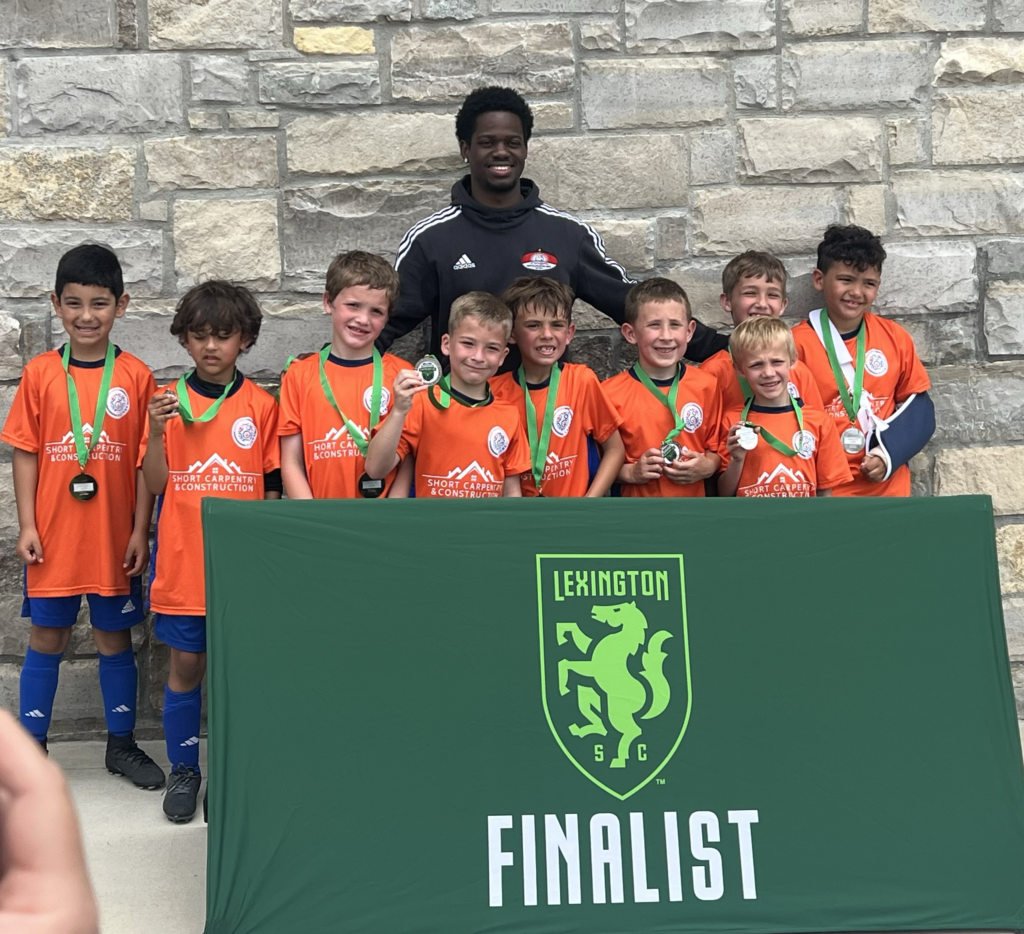
Children are naturally designed to learn through relationships and shared experiences.
Soccer creates opportunities to practice:
* Communication
* Cooperation
* Leadership
* Turn-taking
* Problem solving
* Reading social cues
* Understanding others’ perspectives
Children learn that being part of a team requires listening, adapting, encouraging others, and working toward a shared goal.
Social participation is an important childhood occupation. Occupational therapists recognize participation with peers, friendships, and community activities as essential parts of healthy development.
What If My Child Isn’t Athletic?
Soccer does not need to be about becoming the next professional athlete.
For children, soccer can simply be about:
* Movement
* Confidence
* Friendship
* Exploration
* Learning
* Healthy habits
Children do not need perfect coordination or advanced skills to benefit from soccer.
Soccer Themed Activities Designed by a Pediatric OT
A child may begin with:
* Kicking a ball back and forth in the backyard
* Practicing stopping and starting
* Playing a simple target game
* Walking or running with a ball
* Joining a beginner-friendly program
The goal is not perfection. The goal is participation.
At Sunny Day Therapy, our occupational therapists help families find the “just right challenge”—activities that are meaningful, motivating, and appropriately challenging to support growth.
—
A Pediatric Occupational Therapist’s Perspective on Soccer Games and Play
As pediatric occupational therapists, we understand that soccer is much more than kicking a ball.
Soccer strengthens the nervous system, builds executive functioning, develops body awareness, supports emotional regulation, and encourages participation in meaningful childhood occupations.
Every practice becomes an opportunity for growth—not only as an athlete, but as a learner, friend, and confident child.
At Sunny Day Therapy in Lexington, Kentucky, we use movement-based activities to help children strengthen their bodies and minds. Whether we are kicking soccer balls toward targets, practicing coordination, building strength, or creating imaginative movement games, each activity is designed to support the whole child.
This week in our clinic, we are learning to take turns kicking soccer balls toward a goal. We are practicing coordination, motor precision, teamwork, and resilience.
On and off the field, children are learning that they can try, adapt, grow, and become confident participants in the many “games” life brings.
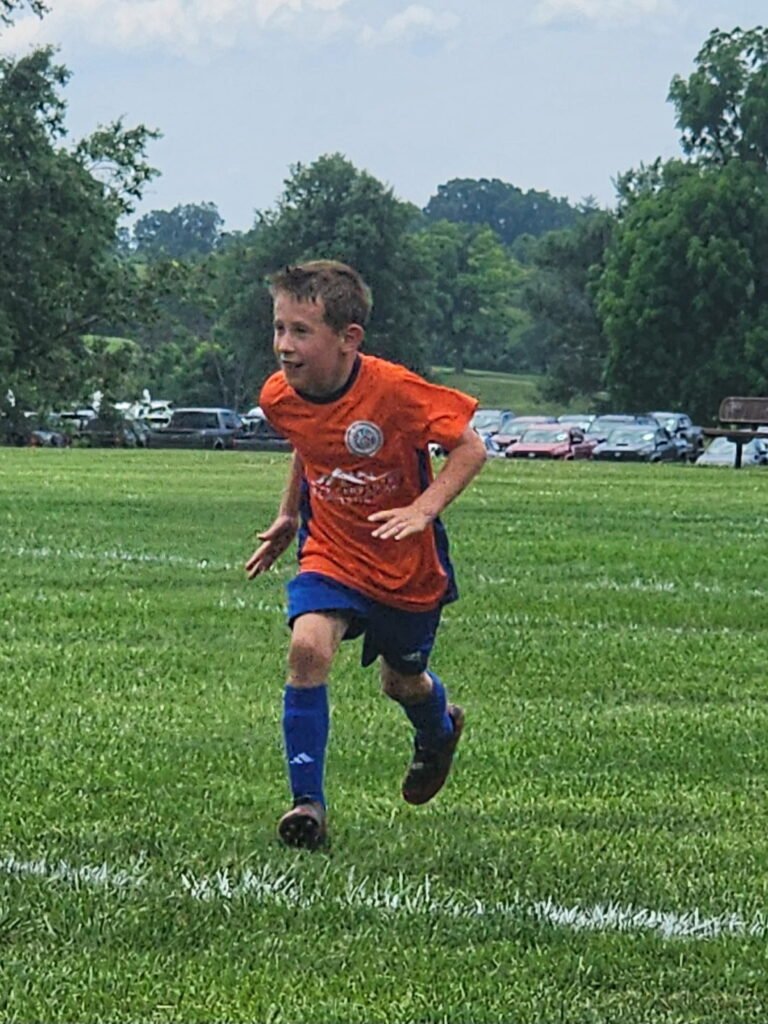
Sunny Day Soccer Brain Builders: Activities Families Can Try at Home
You do not need a soccer field to support your child’s developing brain and body. Simple soccer-inspired activities at home can help children build coordination, executive functioning, sensory processing skills, confidence, and emotional regulation.
The goal is not perfect soccer skills. The goal is meaningful movement, connection, and opportunities for children to learn through play.
—
Stop-and-Go Soccer: Building Attention and Impulse Control
Skills supported:
* Attention
* Listening
* Impulse control
* Body control
* Emotional regulation
**How to play:**
Have your child kick or dribble a ball while you call out:
🟢 Green light = Go
🟡 Yellow light = Slow motion
🔴 Red light = Freeze
Add challenges:
* Can you freeze like a statue?
* Can you balance on one foot when you stop?
* Can you take three deep breaths before starting again?
**Occupational Therapy Connection:**
Stopping the body requires the brain to practice inhibition—the ability to pause, think, and choose a response.
—
Soccer Obstacle Course: Building Motor Planning and Coordination
**Skills supported:**
* Motor planning
* Balance
* Coordination
* Problem solving
* Strength
Create a simple obstacle course using items you already have:
* Pillows
* Cones
* Chairs
* Laundry baskets
* Tape lines on the floor
Ideas:
* Dribble around cones
* Crawl under a chair
* Jump over a line
* Kick the ball into a target
* Balance before taking a shot
Obstacle courses encourage children to plan, adjust, and complete movements—important skills for sports, school, and daily activities.
—
Soccer Target Practice: Building Visual Motor Skills
**Skills supported:**
* Visual tracking
* Coordination
* Grading force
* Accuracy
Try:
* Kicking a ball into a laundry basket
* Knocking down plastic cups
* Aiming for numbers taped to a wall
* Kicking from different distances
Children learn how much force to use, how to adjust their bodies, and how to coordinate vision with movement.
—
Animal Soccer: A Sunny Day Therapy Favorite
Children naturally learn through imagination. Add animals to soccer play to make movement more engaging.
Bear Soccer
Bear crawl to the ball before kicking.
Supports:
* Core strength
* Shoulder stability
* Proprioception
Frog Soccer
Complete frog jumps before taking a shot.
Supports:
* Lower body strength
* Coordination
* Body awareness
Crab Soccer
Crab walk to retrieve the ball.
Supports:
* Core activation
* Motor planning
* Strength
Imagination makes movement meaningful—and meaningful movement is where learning happens. As we work with your child, we will develop a personalized recommendation of exercises called a sensory diet.
—
Story Soccer: Building Executive Function Through Imagination
Children develop important thinking skills when they create and solve problems through stories. This is a key theme of our Story Power training programs for schools and groups (such as therapists).
Create and discuss a simple adventure:
*”The team lost the soccer ball before the biggest game of the season. How can we solve the problem?”*
Ask:
* What is the problem?
* What is our plan?
* What could we try?
* What happens if our first idea does not work?
* How can we work together?
This supports:
* Flexible thinking
* Problem solving
* Planning
* Communication
* Emotional regulation
Learn more about Dr. Day’s Story Power Coaching Program
—
Frequently Asked Questions About Soccer and Child Development
Is soccer good for children’s brain development?
Yes. Soccer is both a physical and cognitive activity. Players must constantly process information, make decisions, remember rules, regulate impulses, and adapt to changing situations. These skills support executive functioning and everyday problem solving.
—
Can soccer help children with ADHD?
Soccer may be beneficial for many children with ADHD because it combines movement, structure, teamwork, and opportunities to practice attention, self-control, and emotional regulation.
Physical activity also provides important sensory input that can help children feel more organized and ready to participate.
—
What skills does soccer improve in children?
Soccer supports development of:
* Coordination
* Balance
* Strength
* Endurance
* Motor planning
* Visual processing
* Executive functioning
* Sensory processing
* Social skills
* Confidence
—
What activities improve coordination in children?
Activities that combine movement, thinking, and problem solving can support coordination.
Examples include:
* Soccer
* Obstacle courses
* Dance
* Swimming
* Bike riding
* Playground activities
* Catching and throwing games
Occupational therapists often use meaningful activities like these to strengthen the skills children need for everyday participation. At Sunny Day, we meet your child where they are to connect with them and promote regulation. We model positive ways to address emotions and problem solve. We share exercises that provide just-the-right challenge to grow strong.
—
Why does my child struggle with sports?
Some children may struggle with sports because of challenges with:
* Coordination
* Balance
* Strength
* Motor planning
* Sensory processing
* Attention
* Confidence
* Following multi-step directions
Difficulty with sports does not mean a child cannot participate. With support and practice, children can build skills and confidence. Our Occupational Therapy Doctors can help you develop strength and coordination to get the daily tasks you want to get done.
—
Can occupational therapy help my child participate in sports?
Yes. Pediatric occupational therapy helps children develop the foundational skills needed for successful participation in sports, school, play, and daily activities.
Occupational therapists may support:
* Motor coordination
* Strength and endurance
* Sensory processing
* Executive functioning
* Emotional regulation
* Confidence with new activities
Learn about Sunny Day’s pediatric OT.
—
When Soccer Feels Difficult: How Occupational Therapy Can Help
For many children, soccer is a fun way to build confidence, friendships, and developmental skills. However, some children may want to participate but experience challenges with coordination, attention, sensory processing, motor planning, endurance, or emotional regulation.
A child may benefit from additional support if they:
* Avoid sports or playground activities
* Become frustrated when learning new movement skills
* Have difficulty keeping up with peers
* Struggle with balance or coordination
* Avoid certain sensory experiences
* Have difficulty following multi-step directions
* Lack confidence trying new activities
Our pediatric occupational therapy looks at the whole child—the way the brain, body, sensory systems, emotions, and environment work together.
At Sunny Day Therapy, we help children build the skills needed to participate more confidently in sports, school, play, and everyday life.
Our occupational therapy services support children with:
* Executive functioning challenges
* Sensory processing differences
* Coordination concerns
* Developmental delays
* Attention challenges
* Emotional regulation needs
* Motor planning difficulties
—
Sunny Day Therapy: Pediatric Occupational Therapy in Lexington, KY
At Sunny Day Therapy, we believe every child has unique strengths, interests, and potential.
Through individualized pediatric occupational therapy plans, we help children strengthen their bodies, understand their nervous systems, develop confidence, and participate more fully in the activities that matter most.
Whether your child is learning to kick a soccer ball, manage emotions, improve coordination, build independence, or participate with peers, our goal is to help children shine.
**Sunny Day Therapy**
Lexington, Kentucky
Website: SunnyDayTherapy.net
Phone: 859-575-0799
Email: admin@sunnydaytherapy.net
Sunny Day Therapy helps children and adults build whole-body strength, confidence, and skills for life’s everyday games.
About the Author: Occupational Therapist Kim Day, owner of Sunny Day Therapy in Lexington, KY
Dr. Kimberly Day, OTD, MS, OTR/L, BCP, CIMI-2, CPRCS, PMH-C, PCES, ECHM, is a Board Certified Pediatric Occupational Therapist and founder of Sunny Day Therapy in Lexington, Kentucky. Dr. Day specializes in pediatric occupational therapy, executive functioning, sensory processing, infant development, and helping children participate successfully in daily activities.
Research and References
The information in this article is based on current research related to childhood physical activity, brain development, executive functioning, cognitive health, emotional regulation, and healthy childhood development. It is for educational purposes only.
American Academy of Pediatrics. (2024). *The role of the pediatrician in the promotion of healthy, active living.* Pediatrics, 153(3), e2023065480. https://doi.org/10.1542/peds.2023-065480
Centers for Disease Control and Prevention. (2024). *Physical activity guidelines for school-aged children and adolescents.* https://www.cdc.gov/physical-activity-education/guidelines/index.html
Diamond, A. (2013). Executive functions. *Annual Review of Psychology, 64*, 135–168. https://doi.org/10.1146/annurev-psych-113011-143750
Donnelly, J. E., Hillman, C. H., Castelli, D., Etnier, J. L., Lee, S., Tomporowski, P., Lambourne, K., & Szabo-Reed, A. N. (2016). Physical activity, fitness, cognitive function, and academic achievement in children: A systematic review. *Medicine & Science in Sports & Exercise, 48*(6), 1197–1222. https://doi.org/10.1249/MSS.0000000000000901
Lubans, D. R., Richards, J., Hillman, C. H., Faulkner, G., Beauchamp, M. R., Nilsson, M., Kelly, P., Smith, J., Raine, L., & Biddle, S. J. H. (2016). Physical activity for cognitive and mental health in youth: A systematic review of mechanisms. *Pediatrics, 138*(3), e20161642. https://doi.org/10.1542/peds.2016-1642
National Institute of Mental Health. (n.d.). *Exercise and mental health.* National Institutes of Health.
U.S. Department of Health and Human Services. (2018). *Physical Activity Guidelines for Americans* (2nd ed.). U.S. Department of Health and Human Services.
World Health Organization. (2019). *Guidelines on physical activity, sedentary behaviour and sleep for children under 5 years of age.* World Health Organization.
World Health Organization. (2020). *WHO guidelines on physical activity and sedentary behaviour.* World Health Organization.